BTC, ETH, LTC, USDT, SOL
Most crypto casinos take the major coins for deposits, but withdrawal support is often narrower. Before you deposit, check that the coin and network you plan to cash out with actually appears on the withdrawal page.

Home / Categories / Crypto
Crypto casinos compared from a skin gambler's point of view: which sites let you turn CS2, Rust, and Dota 2 skins into a playable balance, how fast withdrawals really arrive, and where KYC rules or bonus terms can lock up your money.
Crypto casinos with public referral evidence, ranked by our current review score.
Most crypto casinos take the major coins for deposits, but withdrawal support is often narrower. Before you deposit, check that the coin and network you plan to cash out with actually appears on the withdrawal page.
Plenty of casinos advertise no-KYC signup yet still request identity documents before larger withdrawals. Read the terms for verification thresholds, bonus locks, and maximum cashout rules before staking anything you cannot afford to lose.
We score crypto gambling sites on tested withdrawals, license checks, published odds, and community complaint history rather than advertised bonus size. Sites still being tested are clearly labeled instead of ranked.
What a 2026 crypto gambling site looks like on arrival, and which homepage details tell you more than the bonus banner.
The modern crypto casino is really three gambling products behind one wallet: a casino floor of slots, originals, and live tables; a sportsbook; and increasingly an esports book covering the same CS2 and Dota tournaments whose skins many players cash in to fund their balance. Thunderpick is a clean example of the layout — esports betting, casino games, and sports betting as parallel hubs, with the deposit rail supporting Bitcoin, Ethereum, Litecoin, and stablecoins next to Apple Pay, Google Pay, and cards. That payment strip is worth reading closely on any site: the coins shown at signup are not always the coins available at withdrawal.
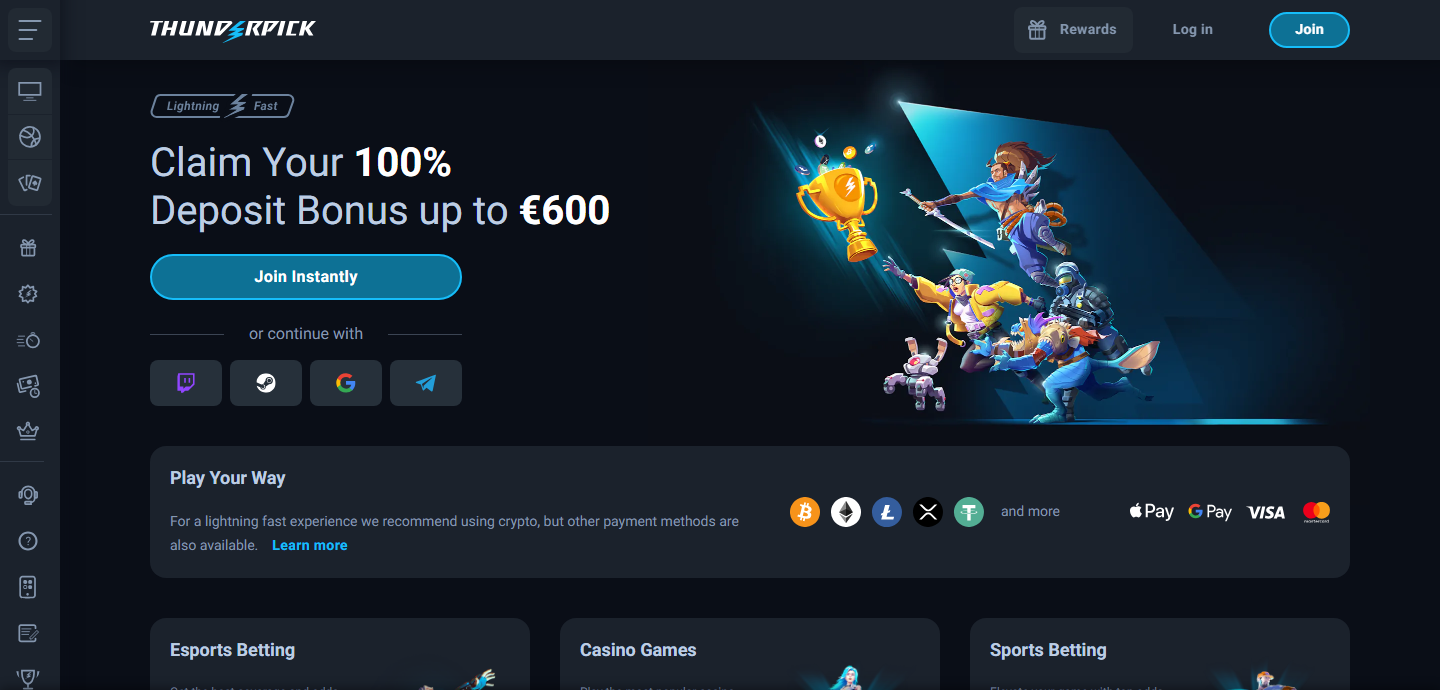
Notice the login row too: signing in with Steam, Twitch, or Google is standard now, which is exactly why phishing pages imitate these sites so heavily. A real operator never needs your Steam password typed into its own page — the OAuth window belongs to steamcommunity.com or it does not belong at all. And the headline deposit match, here and everywhere, is priced in wagering requirements: read the multiplier, the game weighting, and the maximum cashout before treating bonus balance as money.
Once you have seen five crypto casinos, the games blur together — the same slot providers, the same crash and plinko originals, similar VIP ladders. The real differences are operational. Withdrawal speed and minimums decide whether a win is money this hour or this week. KYC policy decides whether a big withdrawal triggers a document request the terms only hinted at. License quality decides whether complaints go anywhere. And for skin gamblers specifically, the deposit path matters: some casinos take skins directly through payment processors, while others need you to sell on a marketplace first and move crypto across. Our ranked cards above weight those operational facts over bonus size, and the new-casino watchlist holds anything too young to have a payout track record.
If you already hold CS2 or Rust skins, crypto casinos solve two problems that pure skin-gambling sites struggle with. First, value becomes portable: sell skins on a marketplace or through an instant-sell bot, move the crypto to a casino, and your bankroll is no longer tied to one game's economy. The same wallet covers Rust skins today and CS2 knives tomorrow. Second, withdrawals are usually faster and more predictable. On-chain payouts in coins like LTC or SOL often land within minutes, while skin withdrawals depend on a site's bot inventory and Steam trade holds. The trade-off is volatility: a balance held in BTC or ETH changes value while you sleep, on top of the same house edge you face at any casino. Only gamble with money or skins you can afford to lose outright.
A growing number of crypto casinos accept skins through skin-payment processors, checkout services that sit between you and the casino. You trade your CS2, Rust, or Dota 2 items to the processor's bot, it prices them, and the casino credits your account in crypto or site balance. Before using one, verify three things. Compare the quoted skin prices against an open marketplace, because skin-deposit rates commonly sit below market value. Confirm whether skin-funded deposits carry extra wagering requirements before withdrawal, since some sites treat them like bonus money. And make sure the processor publicly names the exact bot accounts it uses, because fake "deposit bots" sent through impersonation trades are one of the most common skin-phishing scams around.
Crypto roulette is usually a simplified wheel with red, black, and a high-multiplier green or gold slot rather than full European roulette. That extra slot is where the house edge lives. Check whether the site publishes its payout table and offers a provably fair seed check, and note that bonuses often exclude even-money roulette bets.
Slots on crypto casinos come from third-party providers, and each game has a published RTP, or return to player. Look for the RTP figure in the game's info panel, because some casinos license lower-RTP versions of the same slot. Volatility matters too: high-variance slots swing much harder in both directions than steady low-variance titles.
Crash shows a rising multiplier that can bust at any moment, and you win by cashing out before it does. It feels skill-based, but the bust point is decided the moment the round starts. Verify the provably fair implementation and check whether the site publishes its house edge, since crash margins vary widely between operators.
Plinko drops a ball through a peg board into multiplier buckets, with risk settings that reshape the payout spread. Low-risk boards pay small amounts often, while high-risk boards concentrate value in rare edge buckets. A trustworthy crypto casino publishes the exact multiplier table for every row count and lets you verify each individual drop.
Mines is a grid game: reveal safe tiles to grow a multiplier, hit a mine and lose the bet. You control variance yourself by choosing how many mines are hidden. Because every outcome is generated per round, provably fair verification matters here more than anywhere. Confirm you can check the server seed after each game.
Dice is the simplest crypto casino game: pick a target number and bet the roll lands over or under it. The payout scales directly with your win chance, so the house edge is easy to calculate yourself. That transparency makes dice the quickest way to test whether a casino's provably fair system actually verifies.
Many crypto casinos attach a sportsbook with esports markets, including CS2 and Dota 2 matches. Odds margins vary far more between sportsbooks than casino house edges do, so compare lines against a reference book before betting. Also read the sportsbook's own withdrawal rules, because some sites apply separate limits to sports winnings.
Live casino streams real dealers for blackjack, baccarat, and game shows, supplied by studio providers rather than the casino itself. These games are not provably fair in the cryptographic sense, so you are relying on the studio's regulation instead. Check which provider runs the tables and whether your region is permitted to play them.
Every crypto casino review on SkinRake follows the same checklist. We confirm the operating company and its license claim, then look the license up with the issuing regulator instead of trusting a footer badge. We deposit, play, and request a withdrawal with our own funds, recording how long the payout takes and what verification is demanded along the way. We read the full bonus terms for wagering multipliers, maximum cashout caps, and excluded games. Finally, we track community complaint threads over time. Sites we have not finished testing are marked as tracked rather than ranked, and no operator can pay to change a score.