Know the real fee load
Headline commission is only part of the cost. Add up seller fees, buyer fees, and withdrawal charges to see what actually reaches your account after a sale.

Home / Categories / Marketplaces
Compare CS2, Rust, and Dota 2 skin marketplaces on the numbers that decide your payout: seller fees, cash-out methods, payout speed, and the safety checks that keep a sale from going wrong.
Skin marketplaces with public referral evidence, ranked by our current review score.
Headline commission is only part of the cost. Add up seller fees, buyer fees, and withdrawal charges to see what actually reaches your account after a sale.
Supporting a payout method is not the same as offering it to you. Region locks, KYC tiers, currencies, and minimum balances can all block a listed cash-out option.
Stick to marketplaces that hold funds in escrow until the trade completes, and learn the phishing patterns behind most skin-selling losses.
What the leading CS2 skin marketplaces look like, and how to read a market page like a seller instead of a shopper.
Skinport is the archetypal peer-to-peer listing marketplace: millions of CS2 skins organised by weapon category — knives, gloves, rifles, stickers, containers — with a public Trustpilot rating on the homepage and a sell flow built around listing at a price you choose. Listing marketplaces generally pay sellers the most for patient sales, because you set the ask instead of accepting an instant quote. The trade-off is time: popular liquid items move quickly, but rare patterns and high-value knives can sit for weeks unless you undercut the competition.
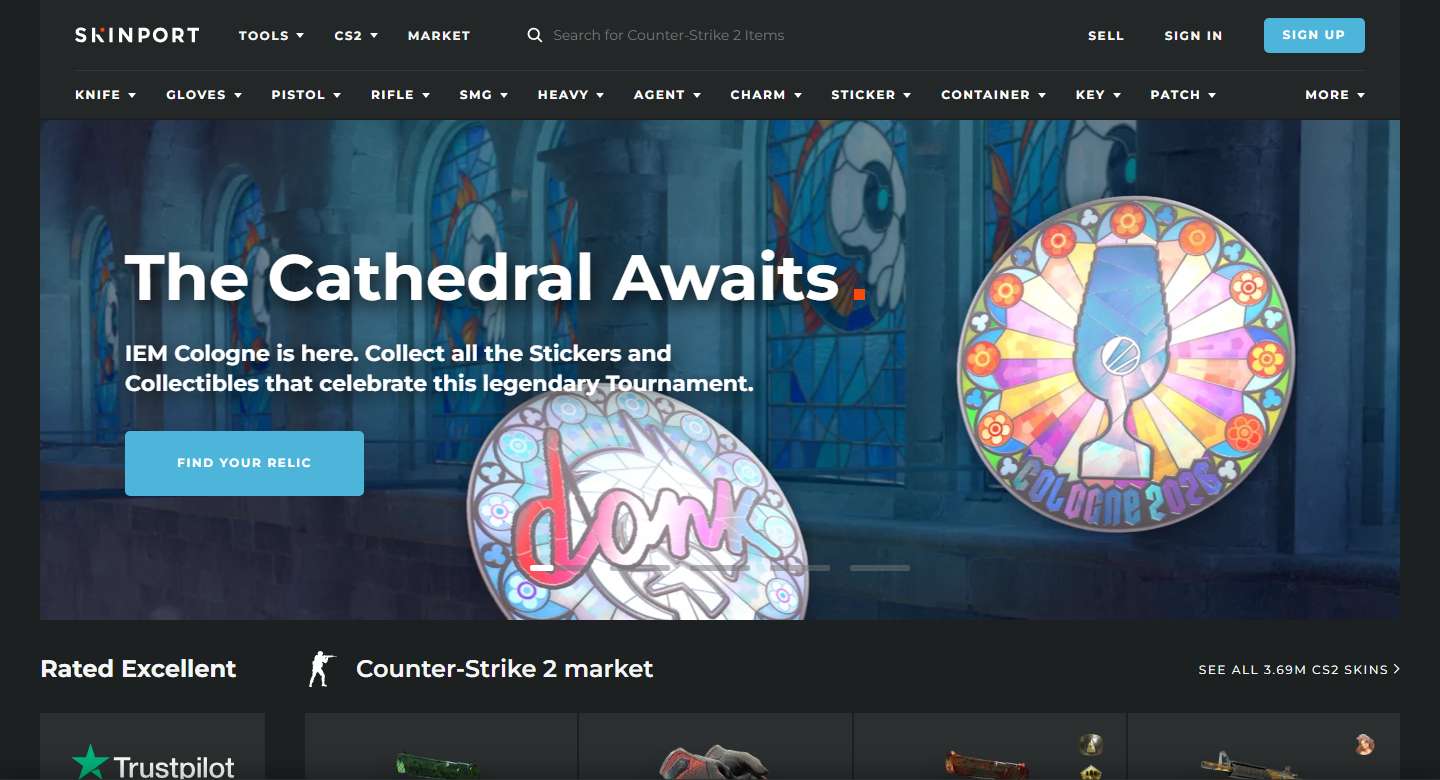
When you evaluate any listing marketplace, look past the headline commission to the full journey: the seller fee on the sale, any payout fee on top, which cash-out methods your region actually gets, and how long the platform holds funds before release. A marketplace with a slightly higher commission but instant bank payouts routinely nets you more, faster, than a "cheap" one whose balance takes days to escape.
CSFloat represents the newer generation of data-first marketplaces. Every listing shows the item's exact float value and paint seed alongside the price, so buyers pay for wear precision — a low-float AK-47 Case Hardened with a desirable pattern is a different product from a generic one, and the interface treats it that way. Bargaining is built in, and the same float database doubles as a free price-checking tool even if you never buy there.
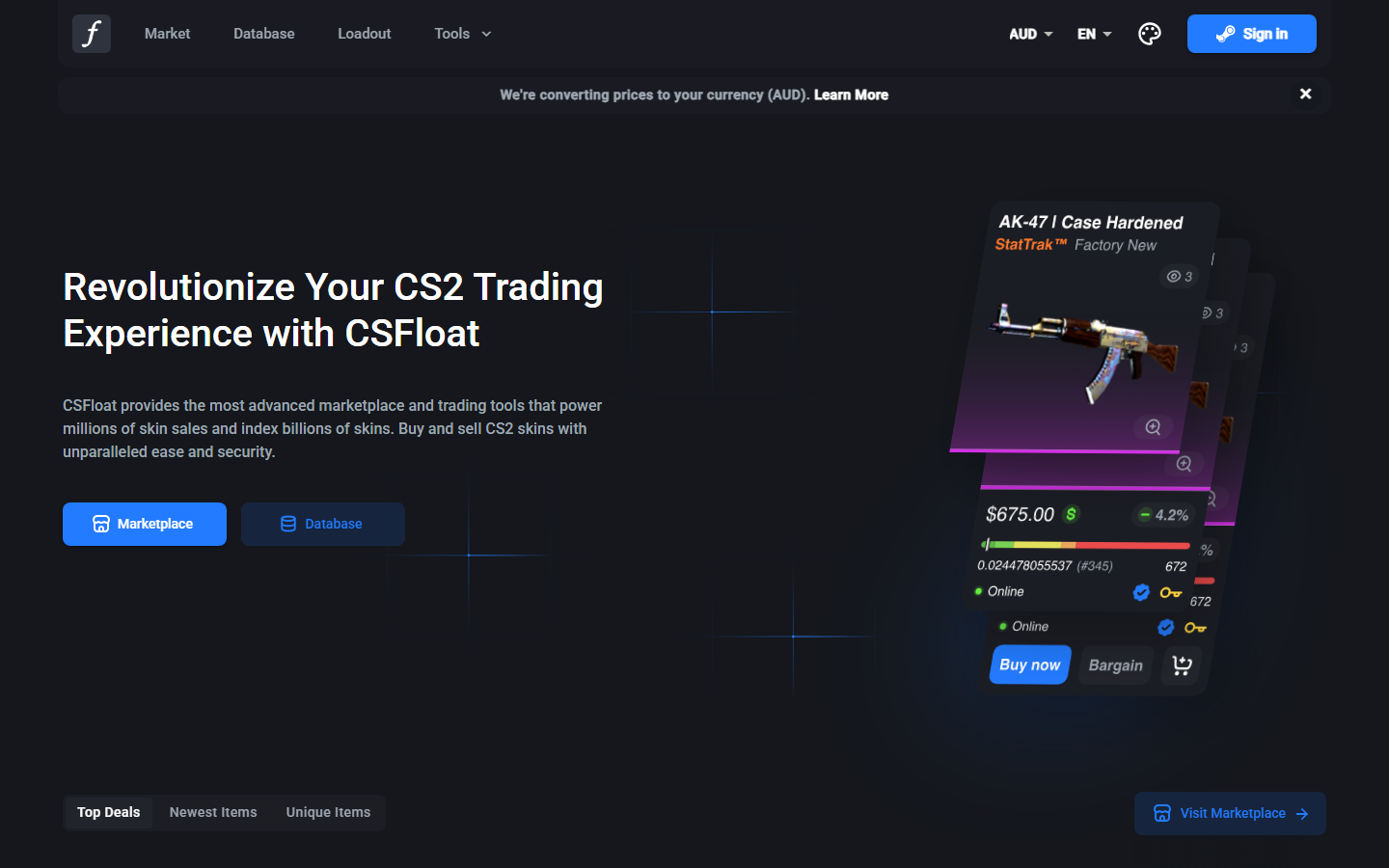
Data-first marketplaces matter for sellers too. Automated pricing on gambling sites and instant trade bots consistently undervalues low floats, rare patterns, and sticker craft; a marketplace that surfaces those attributes lets human buyers pay what the item is actually worth. If you are cashing out an inventory with anything unusual in it, price-check it on a float-aware market before accepting any bot's quote — the difference on a single rare item can exceed the total fees of the entire sale.
The same skins these marketplaces sell are what Rust gambling sites and CS2 casinos accept as deposits — but the exchange rates are not comparable. A gambling site prices your deposit to feed its own margin, pays in non-withdrawable coins until you clear wagering rules, and returns value only through its own inventory. A marketplace prices your item against open demand and pays in money. If there is any chance you want cash rather than bets, sell first and decide afterwards; converting gambling balance back into fairly-priced items is the most expensive route out of the ecosystem. For item-to-item swaps without cash, compare instant trading bots, which trade convenience for a spread instead of a listing fee.
Every skin marketplace makes its money on fees, and the fee structure decides how much of your item's value you actually keep. The most common model is a percentage commission taken from the seller when an item sells. Some marketplaces also charge buyers a separate fee, add withdrawal or payout charges on top, or bake their margin into lower instant-sell quotes instead of a visible commission. Advertised headline rates rarely tell the full story: a low seller fee can be offset by an expensive cash-out step, and "zero fee" promotions are usually temporary or limited to certain items. Before you list anything, find the marketplace's own fee page and work out the total cost of the journey from listing to money in your account.
There are two very different ways to move skins. Trading swaps items for other items, so value stays inside the game economy — and proceeds from Valve's own Community Market stay locked inside your Steam wallet. Selling for real money means using a third-party marketplace that pays out to a bank account, payment processor, or cryptocurrency wallet. Cash sales usually mean accepting a price below the Steam Market listing, because cash buyers expect a discount for taking on resale risk. If your goal is to upgrade your inventory, trading is often more efficient; if you want money you can actually spend outside Steam, a cash-out marketplace is the only route.
Marketplaces broadly offer two selling modes. Instant-sell means the site or its partner buys your item on the spot at a quoted price: you get paid immediately, but the quote is typically the lowest price you will see, because the buyer takes on the risk of reselling. Peer-to-peer listings put your item in front of other users at a price you choose. You usually earn more, but you wait for a buyer, may need to undercut competing listings, and often have to be online to confirm the trade. Many sellers use both: instant-sell for cheap, liquid items and patient peer-to-peer listings for rare or high-value skins.
Legitimate marketplaces use escrow: the buyer's money is held by the platform until the item transfer is confirmed, and only then released to the seller. Steam adds its own layer with trade holds — delays applied to trades from accounts without mobile confirmation — which is a Valve protection, not a marketplace problem. The scams to watch for sit outside that flow: fake "buyers" who ask you to trade directly and promise payment later, phishing sites that clone a real marketplace's login page, and API-key scams that silently swap a genuine trade offer for one sent by an impostor bot. If anyone asks you to complete a deal outside the marketplace's own checkout and escrow, treat it as a scam.
We evaluate each marketplace on the numbers that decide your payout: total fee load from listing to cash-out, supported payout methods, quoted versus real payout speed, and how deep the buyer pool is for the items people actually sell. We also check public complaint patterns, KYC requirements, and how support handles failed trades. We only publish claims we can source, and we flag anything we could not verify instead of repeating a marketplace's own marketing.