Watch the spread
Trade bots profit on the gap between how they value your items and how they price their own. Comparing that spread matters more than any advertised fee.

Home / Categories / Trading Bots
Trade bot sites compared on the things that actually cost or protect you: pricing spread, inventory depth, instant trade speed, failed-offer handling, and the scam patterns that target traders.
Skin trading bots with public referral evidence, ranked by our current review score.
Trade bots profit on the gap between how they value your items and how they price their own. Comparing that spread matters more than any advertised fee.
A bot is only useful if it stocks skins you actually want. Check inventory depth for popular CS2, Rust, and Dota 2 items, not just headline item counts.
Most stolen skins are lost to phishing and API-key scams, not rogue bots. Verify every offer in detail and never log into Steam from links sent in chat.
What the major instant-trade platforms look like, and how to judge a bot site from its own homepage numbers.
Modern trade bots are inventory warehouses with a swap interface on top. SkinsMonkey is a good example of the breed: a six-figure item inventory, tens of millions of completed trades, and a flow where you pick items from the bot's stock, offer items from your own, and settle the difference in site balance. The homepage stats — completed trades, registered users, live item count — are worth reading, because inventory depth is the entire product. A bot with thin stock in the items you actually want is just a worse marketplace.
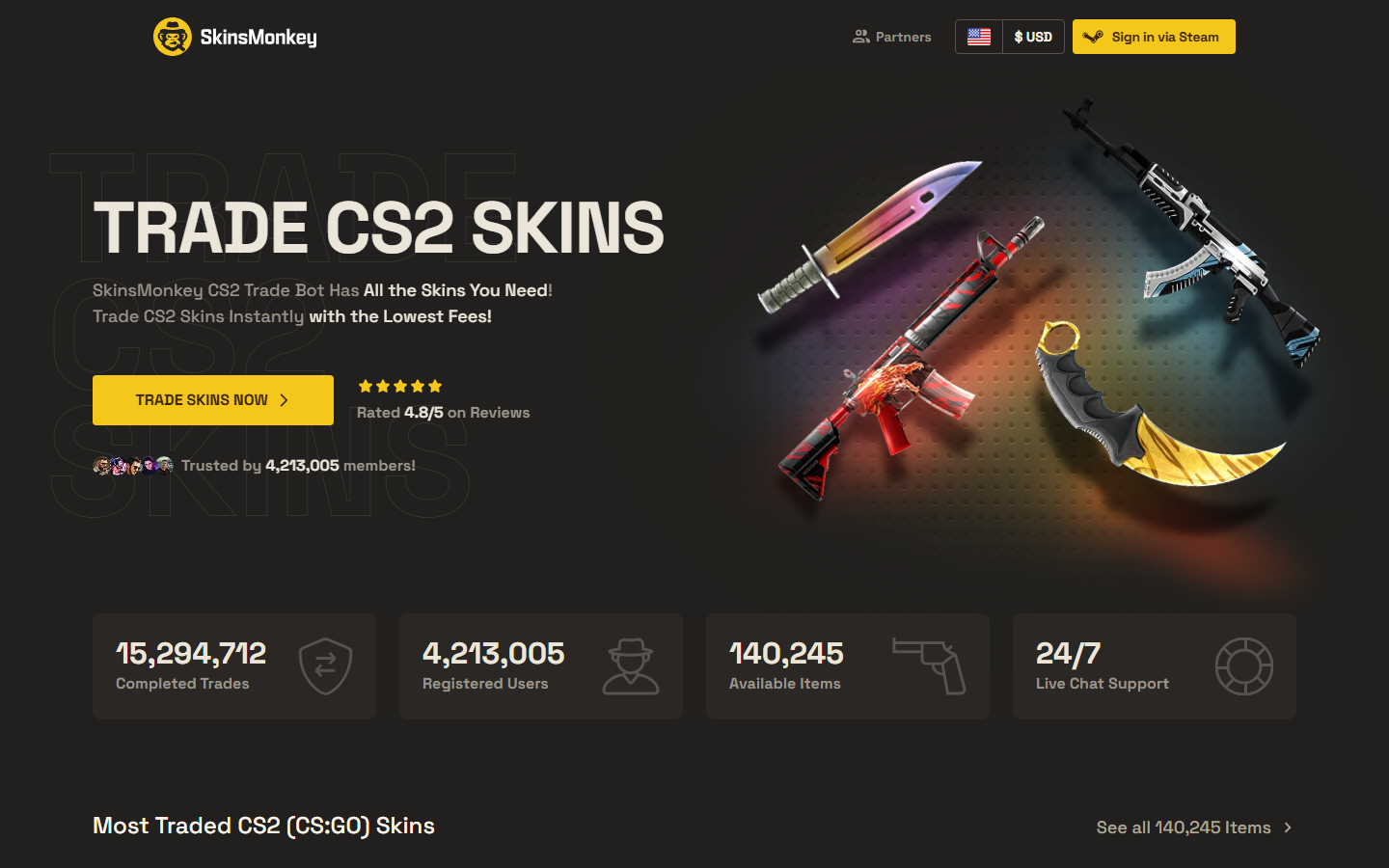
The cost of instant trading is the spread, not a fee page. Bots value your items slightly below market and their own slightly above it, and that gap is the price of convenience. Spreads differ meaningfully between sites and between item classes on the same site — liquid mid-tier skins trade near market while rare patterns and low floats get flattened to generic prices. Sanity-check both sides of any offer against a neutral price source before you confirm, and route anything unusual through a real marketplace instead.
Tradeit.gg shows the standard trade-bot interface: your inventory on one side, the bot's on the other, a running total in the middle, and a public Trustpilot review count in the header. Two details matter more than the layout. First, how the site displays item values during the trade — honest bots show a dollar value per item on both sides so you can compute the spread yourself. Second, what happens with balance: leftover value from an uneven trade should be usable on the next trade or withdrawable, not quietly locked to the platform.
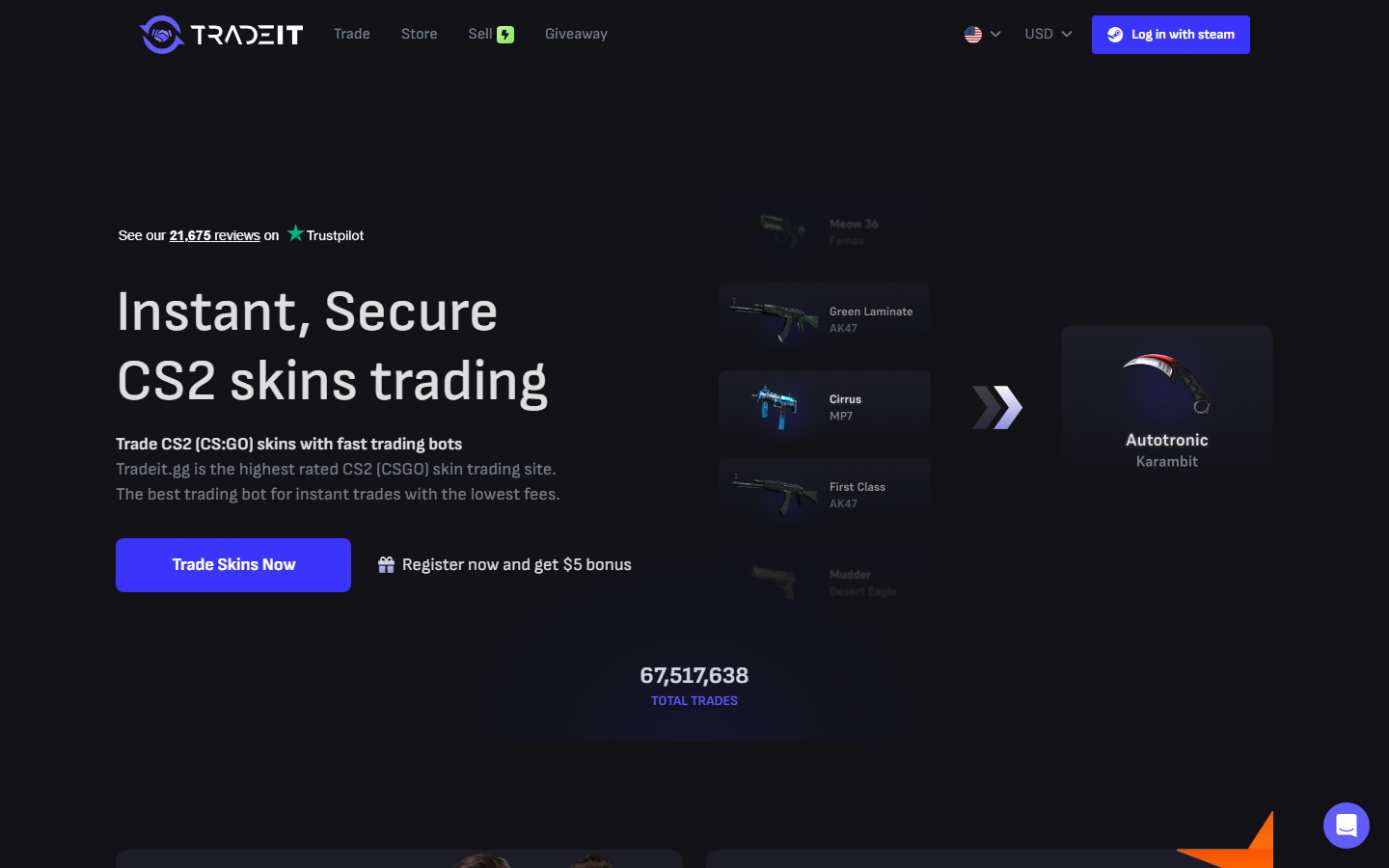
Security discipline matters more on bot sites than anywhere else in the skin economy, because the entire scam industry imitates them. Real bots send trade offers through Steam that you confirm in the Steam app; they never need your account password, Steam Guard codes, or API key. The classic theft pattern is a fake bot site harvesting your API key and silently substituting its own trade offers for legitimate ones. Type the site address yourself, check the trade partner's registration date and level inside the Steam offer, and revoke your API key immediately if you have ever entered it anywhere.
A CS2 trading bot is an automated Steam account, run by a trading site, that holds a large inventory of skins and exchanges them with users instantly. Instead of hunting for a human trade partner, you pick the items you want from the bot's stock, offer items of equal or greater value from your own inventory, and the bot sends a Steam trade offer within seconds. The site earns its margin through the exchange rate rather than a separate bill. Trade bots became popular because they solve the two hardest parts of manual trading: finding a counterparty who has what you want, and trusting them to follow through.
Trade bot sites rarely charge a visible fee. Instead, they price their own items slightly above market value and value your items slightly below it — the gap between those two numbers is the real cost of the trade, usually called the spread or commission. That is why comparing bots means comparing item valuations, not fee pages. A site advertising "zero fees" can still be expensive if its bot prices your skins low. Before confirming any trade, sanity-check both sides of the offer against a neutral price source, and remember that rare patterns, stickers, and low floats are often valued poorly by automated pricing.
Bot-based instant trades come from the site's own inventory, so they complete in seconds but limit you to whatever the bots currently hold. Peer-to-peer trading sites instead match you with other users and coordinate the exchange between your Steam accounts, which usually means better selection and tighter rates, but slower and more manual trades. Instant bots suit quick liquidations and small upgrades; P2P suits specific, higher-value targets you are willing to wait for.
The most damaging scam in skin trading is the API-key scam. If a phishing site tricks you into entering your Steam credentials, attackers can grab your Steam Web API key, monitor your account, cancel a legitimate trade the moment you create it, and instantly resend an identical-looking offer from a bot account that mimics the real partner. You confirm on mobile, and your items go to the thief. Protect yourself: never log into Steam through links from chat messages, check the sign-in URL character by character, and if you have ever used a suspicious site, revoke your API key and change your password. Watch for fake bot impersonation too — verify a trade offer's exact contents and the partner's details before confirming, and be suspicious of any "bot" that contacts you first.
We compare trading bot sites on the spread between deposit and withdrawal valuations, inventory depth for the skins people actually search for, trade speed, and what happens when an offer fails mid-trade. We also weigh security history, public complaint patterns, and how reachable support is when a trade goes wrong. Every claim in our reviews is tied to something we observed or can source — we do not republish a site's own marketing numbers.